


 ABOUT BMA
 Bharat Aawaz
Article 6 of the Indian Constitution: Citizenship Rights for People from Pakistan
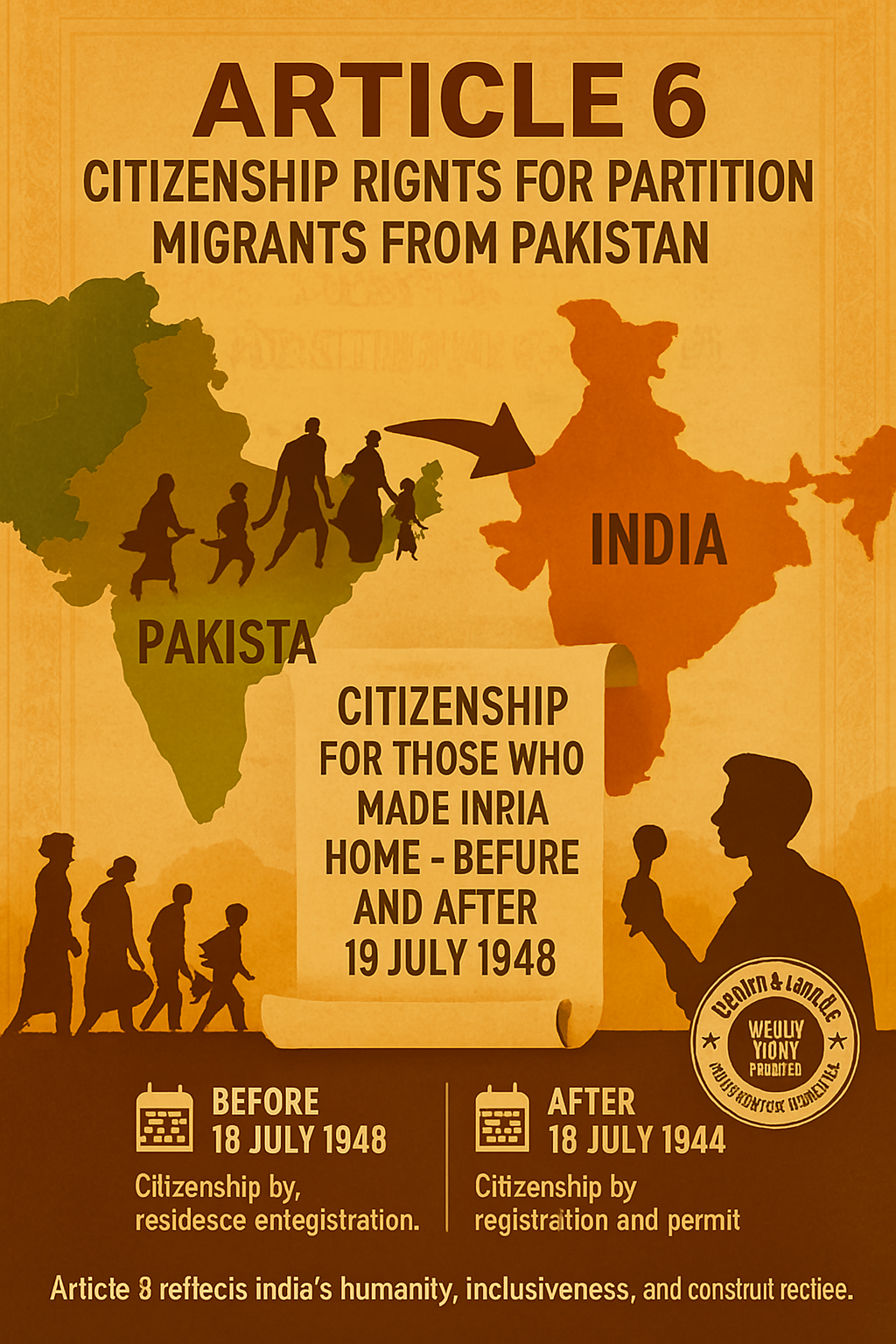
After India’s independence in 1947 and the partition of British India into India and Pakistan, millions of people were displaced across the new borders. Understanding this complex migration, the Indian Constitution included special provisions to determine who would be considered an Indian citizen.
Article 6 of the Indian Constitution deals with the rights of citizenship for people who migrated from Pakistan to India.
What Does Article 6 Say?
Article 6 provides citizenship rights to individuals who migrated from Pakistan to India before the Constitution came into force on 26th January 1950.
It recognizes two categories of migrants:
✅ 1. People Who Came Before July 19, 1948
-
Anyone who came to India from Pakistan before 19th July 1948 will be considered an Indian citizen, if:
-
They have been residing in India since their migration, or
-
They have been registered as a citizen by an officer appointed by the Government of India.
-
📌 They don’t need to go through a legal process — simply residing in India or registering is enough.
2. People Who Came After July 19, 1948
-
If someone migrated after 19th July 1948, they must:
-
Be registered as a citizen of India, and
-
Have obtained a permit for resettlement or permanent residence in India from a competent authority.
-
📌 This group required legal approval through proper permits and registration to gain Indian citizenship.
Historical Importance
Article 6 was essential during the turbulent time of Partition, when lakhs of refugees, especially from Punjab and Bengal, crossed borders seeking safety. The framers of the Constitution wanted to ensure that those who chose to live in India and made it their home were legally recognized and protected.
Constitutional Values Reflected
Article 6 upholds several core values of the Constitution:
-
🕊️ Justice and Humanity – Recognizing the trauma of Partition and welcoming refugees.
-
🧑🤝🧑 Inclusiveness – Allowing people displaced by borders to become full citizens.
-
🏛️ Rule of Law – Establishing a legal and transparent process for granting citizenship.
Limitations of Article 6
-
It only applies to migration from Pakistan to India, not from other countries.
-
It is only relevant to the period before January 26, 1950. After that, Article 11 and the Citizenship Act, 1955 govern citizenship matters.
Conclusion
Article 6 is a powerful reminder of India’s compassionate response during one of the most difficult times in its history. It ensured that those who faced the horrors of Partition but chose India as their home were not left stateless.
As citizens today, understanding Article 6 helps us appreciate the foundations of our democratic values justice, inclusion, and humanity.