


 ABOUT BMA
 Bharat Aawaz
Article 5: Citizenship at the Commencement of the Constitution – Explained Simpl
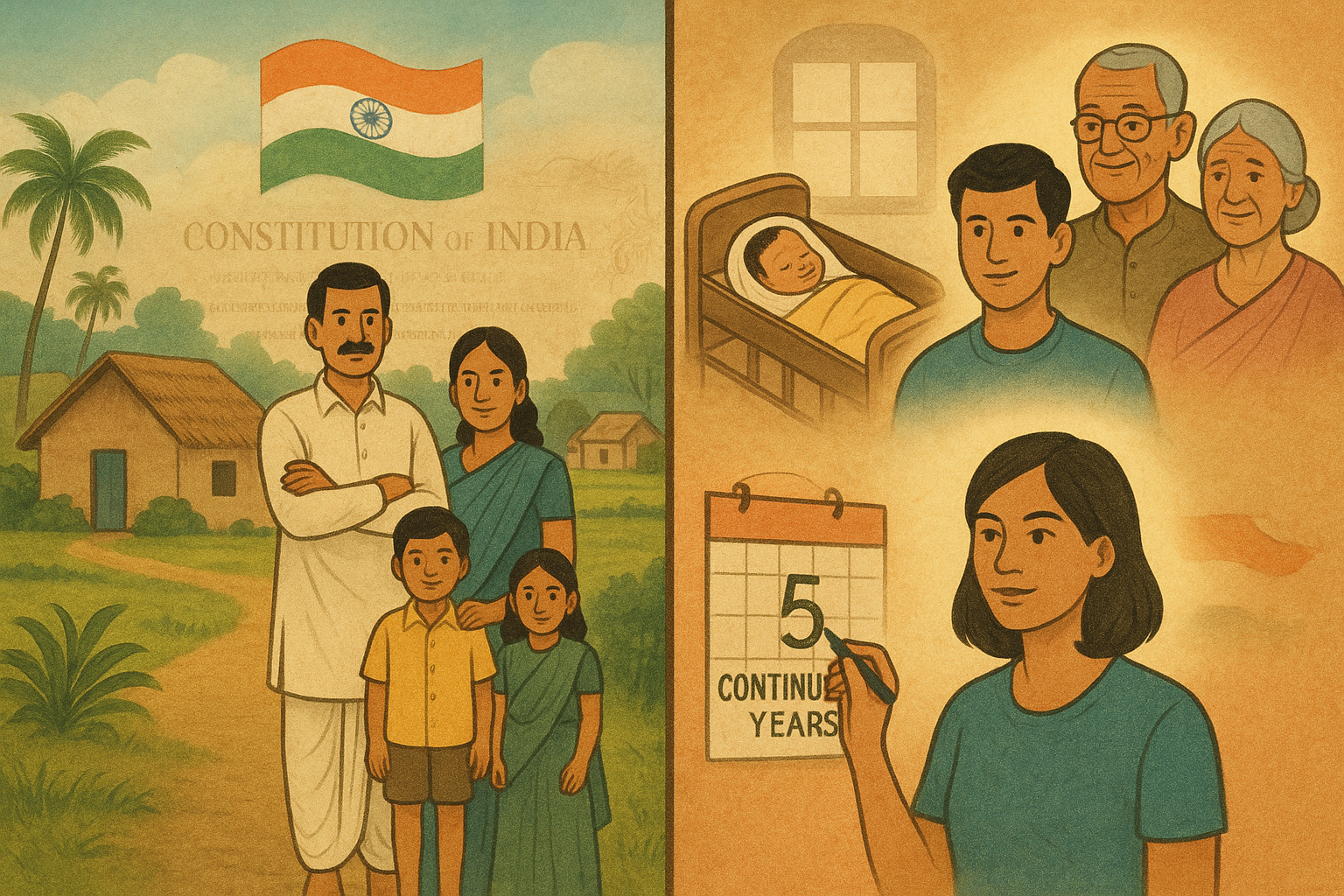
When India became a Republic on January 26, 1950, the question of "Who is an Indian citizen?" needed clear answers. That's where Article 5 of the Indian Constitution plays a vital role. It defines who would be considered an Indian citizen at the time the Constitution came into effect. This article belongs to Part II (Articles 5 to 11), which deals with Citizenship.
“At the commencement of this Constitution, every person who has his domicile in the territory of India and –
(a) who was born in the territory of India; or
(b) either of whose parents was born in the territory of India; or
(c) who has been ordinarily resident in the territory of India for not less than five years immediately preceding such commencement,
shall be a citizen of India.”
Article 5 says that a person will be considered an Indian citizen from the first day of the Constitution (i.e., January 26, 1950) if:
-
They live in India (domicile) – This means India is their permanent home, not just a temporary stay.
-
Plus one of the following applies:
-
They were born in India
-
Their mother or father was born in India
-
They have lived in India continuously for at least 5 years just before Jan 26, 1950
-
-
Domicile: It means the person treats India as their permanent home and intends to stay here.
-
Ordinarily Resident: Living in India regularly without major breaks.
-
Born in India: Includes people born before partition in undivided India.
After independence in 1947 and partition with Pakistan, many people migrated across borders. There were doubts:
-
Are refugees from Pakistan Indian citizens?
-
What about Indians living abroad?
-
What about people who moved after partition?
To answer these, Articles 5 to 11 were created. Article 5 sets the base – who is automatically an Indian citizen on Day 1.
Who Got Citizenship Under Article 5?
Let’s say:
-
A person born in Lahore (then India) in 1930, living in Delhi in 1950 – is a citizen
-
A person whose father was born in India, even if the person was born elsewhere – can be a citizen
-
Someone who came from Pakistan in 1946 and lived in India for 5+ years till 1950 – is also a citizen
-
Article 5 is not applicable today. It was for January 26, 1950, only.
-
Today, Indian citizenship is governed by the Citizenship Act, 1955 and its amendments.
-
This article helped form the foundation of who belongs to India.
Article 5 of the Constitution is one of the first legal steps taken to define what it means to be Indian. It ensured that millions of people born in India, connected to Indian parents, or living in India were given citizenship automatically. It reflects the inclusive spirit of the Constitution and laid the groundwork for building a united Indian identity after independence.