


 ABOUT BMA
 Bharat Aawaz
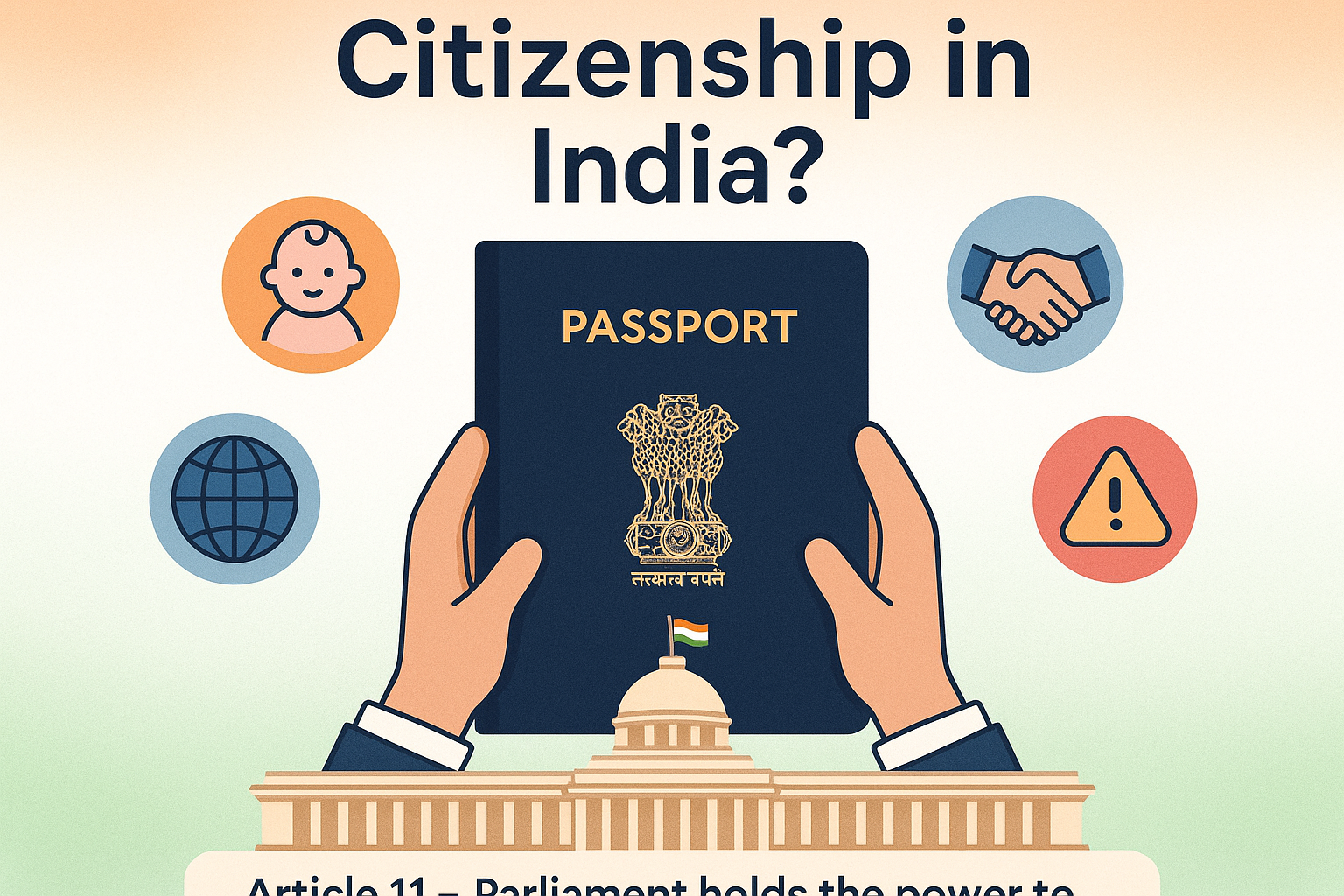
Article 11 – Citizenship Laws Are in the Hands of Parliament
What Is Article 11 All About?
While the Constitution (Part II) talks about who is a citizen of India at the time of the Constitution’s commencement (1950), Article 11 gives Parliament the power to make laws to decide who can become a citizen of India after that.
Simply put:
Article 11 says – "Parliament will decide the rules for citizenship after 1950."
Exact Words of Article 11:
“Nothing in the foregoing provisions of this Part shall derogate from the power of Parliament to make any provision with respect to the acquisition and termination of citizenship and all other matters relating to citizenship.”
Let’s Break It Down:
-
🏛️ The Constitution gave some basic definitions of citizenship (Articles 5 to 10) for people at the time of independence.
-
But the power to change, add or remove rules for citizenship in the future is given to Parliament via Article 11.
What Can Parliament Do Under Article 11?
Using this article, Parliament can:
-
📥 Make laws on how someone can acquire Indian citizenship – by birth, descent, registration, or naturalization.
-
📤 Decide when citizenship can be taken away – if someone breaks laws or acts against national interest.
-
📃 Frame rules about dual citizenship, OCI (Overseas Citizen of India), etc.
Example: Citizenship Act, 1955
This Act was passed by Parliament using the powers granted by Article 11. It has been amended several times to define citizenship rules in different situations.
✳️ Some Key Amendments:
-
1987: Changed citizenship by birth rules
-
2003: Introduced the concept of Overseas Citizen of India (OCI)
-
2019: Introduced the Citizenship Amendment Act (CAA) which provides a path to citizenship for persecuted minorities from neighboring countries.
Real-Life Examples:
-
Child born in India in 2004 to Nepali parents:
✅ May be Indian if rules under the Citizenship Act are satisfied. -
A foreigner marries an Indian citizen:
➡️ Can apply for Indian citizenship after fulfilling naturalization criteria under the Act. -
Someone supporting enemy countries during war:
❌ Their citizenship can be revoked under provisions of the Act, empowered by Article 11.
Why Is Article 11 Important?
-
Gives flexibility to the government to adapt to changing needs (refugees, migrants, national security).
-
Keeps citizenship laws dynamic based on current scenarios.
-
Ensures Parliament, not courts or states, decides these rules — maintaining central control.
Article 11 = Parliament's passport control authority ✈️
It doesn’t grant or remove citizenship itself — it gives Parliament the power to make laws on citizenship.
While your Fundamental Rights protect your freedom as a citizen…
Article 11 decides who can be called a citizen in the first place.
Knowing this helps us understand why debates around CAA, NRC, or refugees are not just legal – they’re constitutional.