


 ABOUT BMA
 Bharat Aawaz
Journalism Rights in India – A Fight for Truth, Then and Now
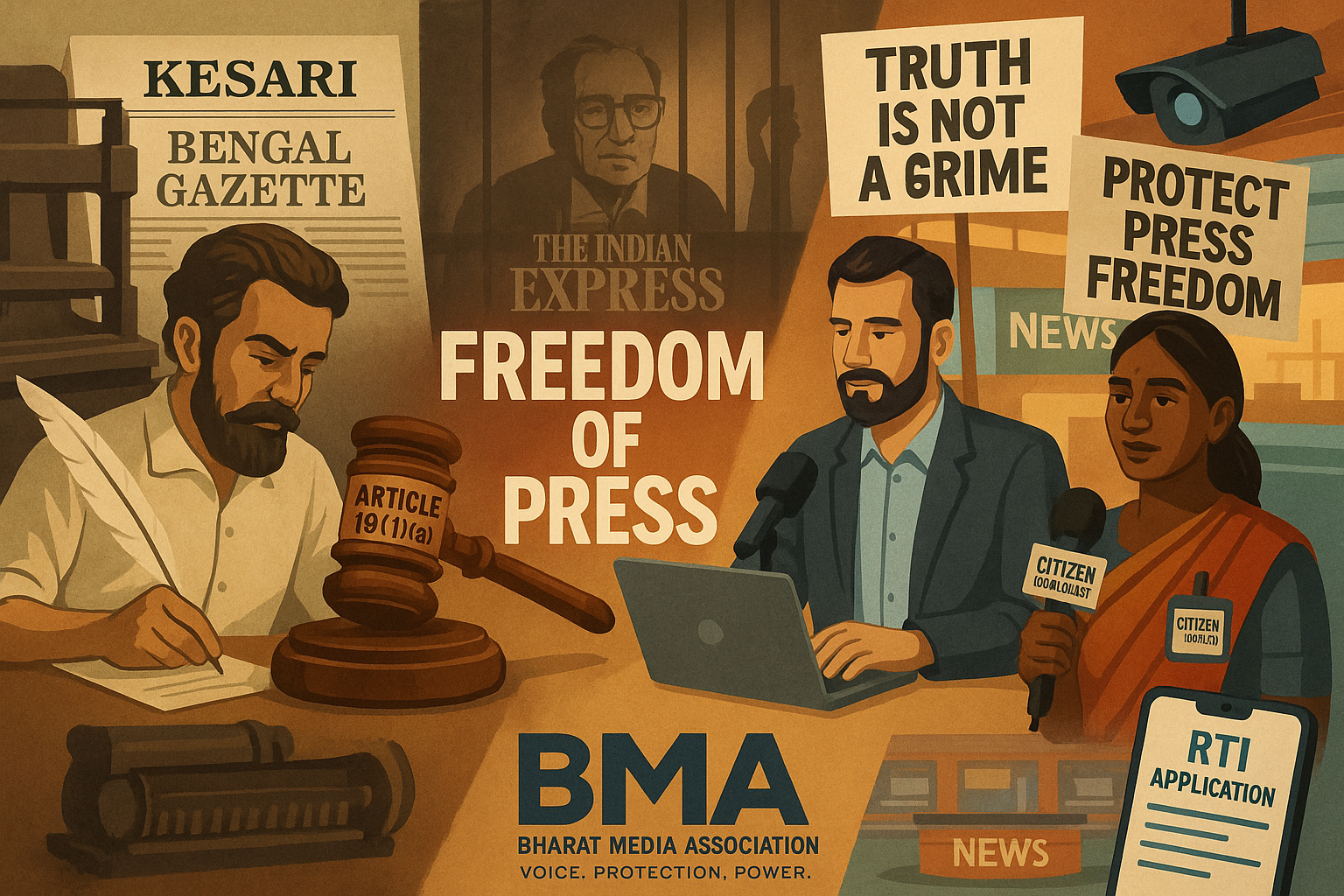
Journalism in India didn’t begin in newsrooms.
It began as a fight a voice raised against injustice. From the British era to the present day, journalism has been the backbone of democracy. But the right to speak freely, report facts, and question power didn’t come easily.
A Brief History of Journalism Rights
-
Pre-Independence Era
Early newspapers like Bengal Gazette (1780) and Kesari (Bal Gangadhar Tilak’s paper) fought colonial censorship. Journalists were jailed, their presses were seized but they never stopped reporting. -
Post-Independence
The Indian Constitution (1950) gave birth to the Freedom of Speech and Expression (Article 19(1)(a)) the backbone of journalism rights. It empowered journalists to speak truth to power. -
The Emergency (1975–77)
A dark chapter: Press was censored, reporters were arrested, and newspapers were forced to publish only government-approved content. But it also sparked resistance. Journalists like Kuldip Nayar and publications like The Indian Express stood firm. -
Modern Era
Digital media, citizen journalism, and social media have opened new spaces. But attacks on press freedom still exist from political threats, legal harassment, to online trolling.
What Are the Rights of Journalists Today?
-
Freedom of Speech (Article 19(1)(a))
You can report, express, and publish without fear unless it incites violence or spreads falsehoods. -
Right to Information (RTI Act, 2005)
A powerful tool to access government data and expose corruption. -
Protection from Unlawful Arrest
Journalists can’t be jailed without legal basis though misuse of laws like sedition and UAPA still threatens them. -
Digital Rights
Online journalism is protected under the same rights but often challenged with surveillance and arbitrary takedowns.
The Challenges Today
-
Attacks on reporters in rural areas
-
FIRs filed against critical stories
-
No national-level law protecting journalists
-
Lack of legal aid and identity for freelance or independent reporters
Why Journalism Rights Matter
-
Because democracy dies without press freedom.
-
Because every citizen deserves truth, not propaganda.
-
Because a free press means a government is being watched.
What Can We Do?
-
Join platforms like Bharat Media Association (BMA) that support legal, financial, and safety assistance to journalists.
-
Use RTI to build fact-based stories.
-
Stand in solidarity when a reporter is attacked or arrested.
-
Encourage local media, citizen reporting, and ground-level stories.
Journalism is not just a job. It’s a duty. A right. A responsibility.
Let’s protect it, practice it, and pass it on.